
Men's ankle boots: Chelsea, work boots, and desert boots


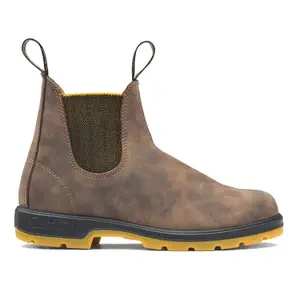


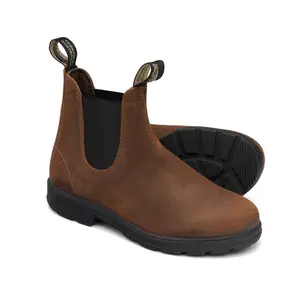

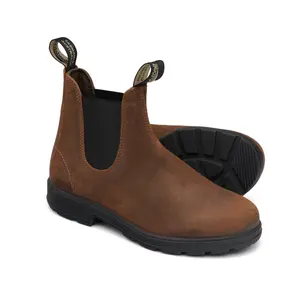


For autumn and winter, the men's ankle boots section brings together tried-and-tested models: the Australian Chelsea from Blundstone, the American work boot from Red Wing Shoes, the English Desert Boot from Clarks, the boat boots from Sebago, and nubuck models from Timberland.
Three types of ankle boots
- The Chelsea: no laces, with elastic side panels, it slips on in a second.
- The work boot: laced high, made of thick leather, it comes from workshops and construction sites.
- The desert boot: low, made of suede, on a soft sole, for dry days.
Each has its own style, from the most urban to the most rugged. Many men end up owning two: a Chelsea for the week, a boot for the weekend.
Blundstone, the Chelsea from Tasmania
The brand Blundstone was established in 1870 in Hobart, Tasmania. Its Chelsea boot features a thick sole that cushions the step, with pull tabs at the front and back for easy wear.
The collection includes several variations: the Original and the Classic for everyday use, the Dress and City Dress for city outfits, a Vegan version, a studded version for snow, and a Safety option for manual jobs.
Red Wing Shoes, the American boot
Born in 1905 in the town of Red Wing, Minnesota, Red Wing Shoes initially supplied workers, farmers, and miners. Its thick leather boots are stitched to be resolable, and they develop a unique patina over the years.
Wear them with a raw denim, a flannel shirt, and a work jacket: this is their natural habitat, and they always look at home there.
Clarks and the Desert Boot
At Clarks, the Desert Boot has become a classic: a suede upper that rises just above the ankle, a few eyelets, and a crepe sole that cushions like a pillow. The Wallabee, made like a moccasin, is its more casual cousin.
These two models prioritise comfort and lightness. They are mostly worn in dry weather, as their sole and suede don’t like rain.
Sebago and Timberland
Sebago transforms the spirit of the boat shoe into a high ankle boot, the Keuka, and offers the Tala in oiled leather. Timberland brings its nubuck boots, designed to withstand rain and mud.
Which boot for your climate?
Where it rains often, a greased or treated leather is essential: it repels water and is easy to maintain. Where winter is mostly dry and cold, a suede desert boot or a lined Chelsea will suffice.
For snow, a treaded or studded sole grips better than a smooth or crepe sole.
Wearing a Chelsea
A brown or black Chelsea pairs well with straight raw denim, with the hem falling just over the boot shaft. With chinos or wool trousers, the finer Dress versions take over from a derby.
Avoid hiding it under trousers that are too long: the silhouette of the shaft is part of its charm.
Wearing a work boot
The high-laced boot is worn with trousers that have substance: thick denim, work trousers, or corduroy. A slight turn-up reveals the shaft and laces, balancing the silhouette.
The right size
Without laces to adjust, a Chelsea should hold the heel snugly from the first fitting: a slight slip at first is normal, but a heel that lifts significantly is not. The Blundstone sizes are given in UK sizes, to be converted using the guide in the product sheet.
A thick leather work boot should fit closely: the leather will stretch and mould over the weeks.
Breaking in your boots
Thick leather takes a few days to soften to your foot. Wear your new boots for a few hours at home, then for short trips, before a long day. A thick sock will minimise friction during this period.
Caring for leather
After a wet day, let your boots dry slowly, stuffed with paper, away from any source of heat. A nourishing cream applied regularly prevents cracking at the creases, and a wax enhances the waterproofing of a boot.
Caring for suede
A desert boot is brushed dry with a soft-bristled brush, going with the grain, and protected with a waterproofing spray. A special rubber eraser removes light marks without damaging the material.
Ankle boots or high boots: what to choose?
In the city, an ankle boot protects the ankle without weighing down the outfit. For the countryside, paths, and heavy rain, a tall boot is safer: check out the men's boots.
All other styles are in the men's shoes by type, and the Highwood boots can be found on the Birkenstock men page.
Frequently asked questions
Can a Chelsea replace a dress shoe?
The Dress and City Dress versions, which are more tailored, go well with a smart casual suit or wool trousers.
Does a Red Wing boot need resoling?
It is designed to be: a cobbler can replace the sole when it wears out.
Is the Desert Boot suitable for winter?
In dry, cold weather, yes; in the rain, its suede and crepe sole struggle.
How do I convert a Blundstone size?
With the size chart in the product sheet, which shows the conversion between UK size and European size.
How long does it take to break in a leather boot?
A few days to a few weeks depending on the thickness of the leather: start with short wears.







