
Men's Derby Shoes: from the city to workwear


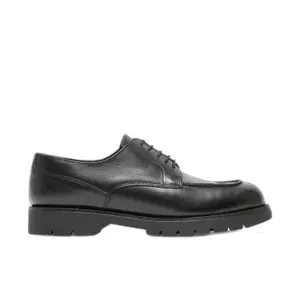


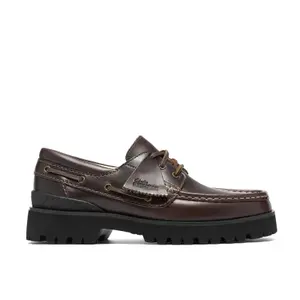
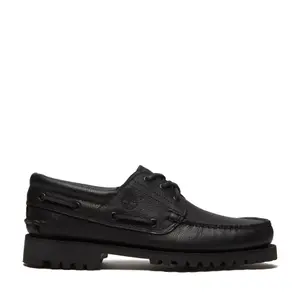
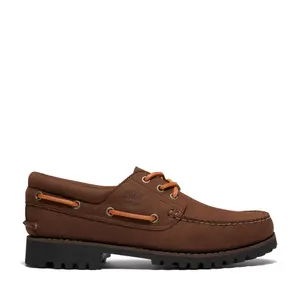
The quintessential lace-up shoe, the men's derby comes here in a sturdy version and a marine version: French-made Kleman derbies, Sebago Docksides boat shoes, Timberland Authentic, Clarks Torhill, and Birkenstock Highwood. Pairs designed to last, from smart casual at the office to the weekend.
Open lacing, closed lacing
What separates a derby from a richelieu is a detail of stitching. On the derby, the sections that hold the eyelets are placed over the vamp, and they open wide: the shoe comfortably accommodates a high instep.
On the richelieu, these sections go under the vamp and remain closed, giving it a more elongated and ceremonial silhouette. The range mainly focuses on derbies and boat shoes, which are easier to wear daily.
The Padror, a service derby
Kleman designed the Padror for demanding professional use: to equip SNCF agents. Its cowhide leather, its stitched platform all around, and its rubber crepe sole give it remarkable durability.
Made in France, it has become a classic in workwear style. The Major, its neighbour, adopts the same codes. The whole collection is on the page Kleman men.
The boat shoe, born on deck
Designed for sailors, the boat shoe had to grip on a wet deck and dry quickly. Sebago established the model with the Docksides, whose leather lace runs all around the foot for adjustable support.
The Portland and Ranger from Sebago, in oiled or waxed leather, and the Authentic by Timberland with three eyelets follow the same principle. See the page Sebago men.
Clarks and Birkenstock
The derby Torhill from Clarks features an upper inspired by the Wallabee on a thick, ridged sole. Birkenstock, on the other hand, offers the Highwood, a laced suede shoe with the comfort of its custom sole.
Pairing a derby with your outfit
- Wool trousers and blazer: a smooth leather derby, well polished.
- Raw denim and overshirt: a derby with a crepe sole like the Padror.
- Light chinos and polo: a boat shoe, barefoot.
At the office
In a workplace where suits are no longer required, a black or dark brown derby adds the right amount of style to chinos and a shirt. The crepe sole, more modern, stands out without looking sloppy.
The right size
Lacing allows you to adjust a derby to your foot: stick to your usual size. The thick leather of a Padror shapes to your foot in a few weeks, without needing to size up.
A boat shoe, with minimal heel support, must stay in place when walking: if it slips, tighten the surrounding lace.
Materials
Smooth leather takes polish and develops a patina with elegance. Oiled leather, typical of boat shoes, repels water and darkens beautifully over time. Suede remains the softest but is also the most fragile in rainy weather.
The sole
A crepe rubber sole grips well on wet cobblestones and gives the shoe some volume. A thinner, smoother sole refines the silhouette but is reserved for dry days and dressy outfits.
Caring for a derby
A brush after each outing removes dust, a leather cream nourishes the leather, and occasional polishing makes it shine. A wooden shoe tree, slipped in between wears, absorbs moisture and maintains the shape of the toe area.
Caring for a boat shoe
After a day by the sea, a quick rinse with fresh water removes the salt. Let it air dry in the shade, then apply a product for oiled leather, which keeps the material supple and waterproof.
A derby for all year round
In treated leather and on a crepe sole, a derby carries you through all four seasons: with wool socks in winter and barefoot under shorts in summer. It's one of the most versatile pairs in a man's wardrobe.
Derby or loafer?
For long walks, the lacing of the derby holds the foot better. For speed and ease, the loafer wins: check out the men's loafers and all the styles in the men's shoes by type.
Frequently Asked Questions
How to distinguish a richelieu from a derby?
Look at the base of the eyelets: open and placed on top for the derby, closed and sewn underneath for the richelieu.
Is the Padror suitable for a suit?
More for a smart casual outfit or wool trousers: its crepe sole gives it a workwear vibe.
Why does the boat shoe have a lace all around?
To adjust the support for the foot along its entire length, a legacy from its use on boats.
Is a shoe tree required for a derby?
It’s recommended: it maintains the shape of the shoe and absorbs moisture between wears.
Can you wear a derby without socks?
Yes in summer, with an invisible sock to avoid chafing, under shorts.







