
Women's Luggage: Cabin Suitcases, Hold Luggage and Sets


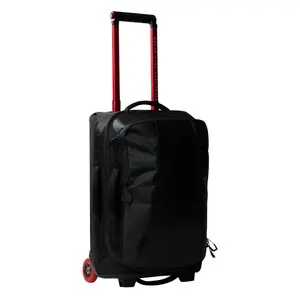
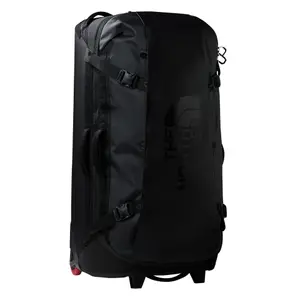


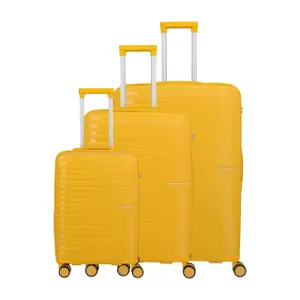
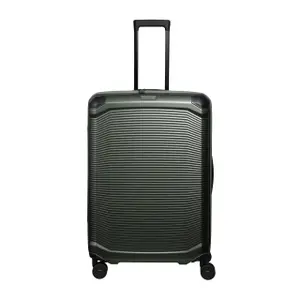
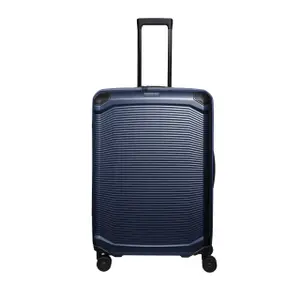

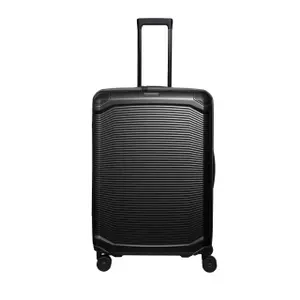


The women's luggage in the department mainly consists of suitcases: cabin trolleys for a weekend, large holdalls for longer stays, and sets of three stacking sizes. Most of them are made by travelite, a German brand founded in Hamburg in 1949, and they roll on four wheels.
What size suitcase for which trip?
- Size S, the cabin suitcase: two or three days, a weekend, a short trip without going through baggage drop.
- Size M: a week of holiday, or a longer stay for a light traveller.
- Size L: two weeks or more, or a family departure with the belongings of several people.
Be generous: a suitcase bursting at the seams closes badly and wears out faster at the zippers.
Cabin suitcase: how to choose it wisely
The women's cabin suitcase must fit within your airline's guidelines. Many European airlines accept a cabin bag of about 55 x 40 x 20 cm, including handles and wheels, but the dimensions and weight vary from one airline to another.
Always check your airline's rules on their website before departure: guidelines can change without notice. A lightweight cabin suitcase also allows for more leeway on weight limits.
Expandable suitcase: a few extra litres for the return
Models marked "ext." have an additional zipper around the edge. When opened, it expands the suitcase by a few centimetres, handy for bringing back holiday purchases.
Be careful in the cabin: an open expandable cabin suitcase may exceed the permitted size. Keep the extension closed both ways if you're travelling without checked luggage.
Four wheels or two wheels?
A suitcase with four wheels is pushed alongside you effortlessly across the smooth floor of an airport or train station, and pivots on the spot in a narrow aisle.
A suitcase with two wheels, like the "2w" versions, is pulled behind you and handles cobblestones and rough pavements better. Choose based on the terrain you encounter most often.
The set of three suitcases
A set of suitcases includes three sizes, S, M, and L, that fit into one another for storage. This way, you'll have the right size for every trip without cluttering up a cupboard.
It’s also a practical solution for a family: each person has their own suitcase, all in a line that’s easy to recognise on the baggage carousel.
Hard suitcase or soft suitcase?
A hard suitcase offers better protection for its contents: perfumes, structured shoes, fragile items brought back from travels. Its shell withstands knocks from the baggage carousel and rain, but it doesn't compress and takes up full space in a cupboard or boot.
A soft suitcase made of fabric allows for an extra item if needed, and its outer pockets keep a book or sweater handy. It works well for car or train trips, where it fits more easily into a tight space.
Travelite, the brand in this section
Founded in Hamburg in 1949, travelite has remained a family business. This section brings together several of its lines, such as Air Base, Next, Crosslite, Paros, Umbria, Briize, or Millennium.
The brand focuses on lightweight and sturdy suitcases, whether for cabin or checked baggage. Some wheeled bags from The North Face and Samsonite complete the range.
Packing your suitcase properly
Place heavy items, shoes, and toiletries against the back of the suitcase, on the wheel side: it will stay stable and won't tip over. Roll clothes instead of folding them, they take up less space and wrinkle less.
Slip into your cabin baggage what you'll need if your checked bag takes a while: a change of clothes, medications, chargers.
Maintaining your suitcase
Wipe the shell or fabric with a damp cloth after the trip, and leave the suitcase open for a few hours to air out before storing. Check the wheels and telescopic handle before each departure.
Completing your travel gear
For your day out, a bag can complement the suitcase: check out the women's bags, or the fabric backpacks from Sandqvist, made for both the city and a getaway. All accessories are gathered in the women's accessories by type and on the women's accessories page.
Frequently asked questions
What cabin suitcase for a weekend?
Size S, lightweight, within your airline's dimensions. Check its empty weight: the lighter it is, the more you can bring.
Does an expandable suitcase fit in the cabin?
Yes, with the extension closed, if its dimensions meet the airline guidelines. When open, it risks exceeding them.
Should I choose a hard or soft suitcase?
A hard shell offers better protection for fragile content, while a soft suitcase adapts better to a loaded boot or luggage rack. Check the material listed on the label.
What to choose for a family trip?
A set of three suitcases, or a large size L to share, along with a cabin suitcase for each person.







